2026-10-28 · Teguh
How Chandler's Dry Heat Warps Kitchen Cabinets
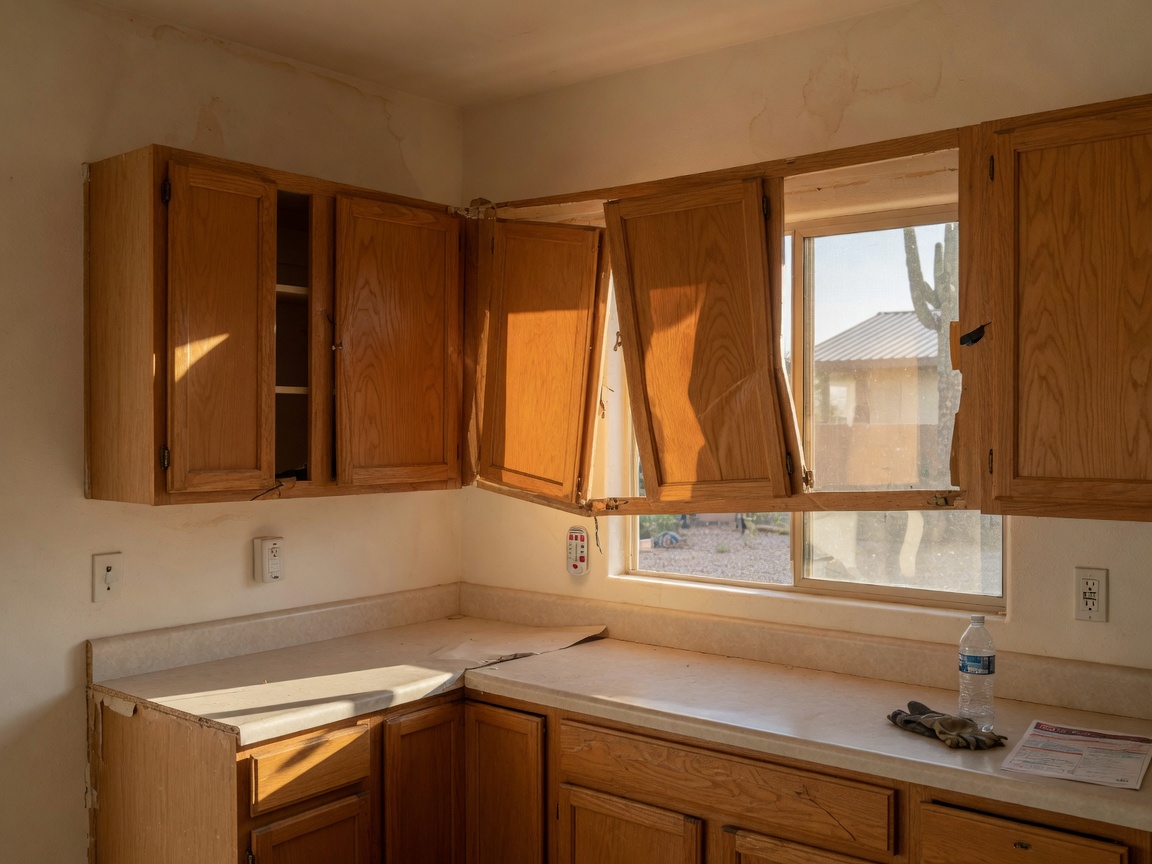
Yes, Chandler's dry heat genuinely warps kitchen cabinets — and it does it faster than most homeowners expect. When indoor humidity drops below 20% during our summer months, solid wood panels can lose enough moisture to shrink 1/8 to 1/4 inch across a typical door face, which shows up as cupped doors, hairline cracks in painted finishes, and gaps opening at mitered corners. I've built and repaired cabinets across Chandler, from 1980s ranch homes near Downtown Chandler to newer builds in Ocotillo, and the pattern is consistent: the drier the house, the faster the wood moves. The good news is that warping is largely predictable and, with the right materials and habits, mostly preventable.
Why Desert Air Moves Wood in the First Place
Wood is a hygroscopic material — it absorbs and releases moisture with the air around it. In a humid climate, cabinets swell; in Maricopa County's desert, they do the opposite. Our summers regularly push outdoor temperatures past 110°F while relative humidity crashes into the single digits, and even indoors, running the AC constantly strips moisture from the air. A cabinet door that was milled at 7–8% moisture content can drift down toward 5% in a Chandler kitchen, and that loss has to go somewhere: the wood shrinks across the grain, panels pull away from their frames, and wide boards cup toward their drier face.
The problem compounds because our swings are seasonal, not constant. Monsoon storms in July and August spike humidity for weeks, wood reabsorbs moisture and swells, then October's dry air pulls it back out. That annual cycle of shrink-swell-shrink works joints loose the same way repeatedly flexing a paper clip eventually snaps it. It's one reason I always talk through material selection during custom kitchen cabinet design rather than letting clients default to whatever solid wood looks best in a showroom sample.
Which Parts of a Cabinet Fail First
Not every component warps at the same rate, and knowing the failure order helps you catch problems early. In my experience servicing kitchens in Chandler, Sun Lakes, and over toward Mesa and Tempe, it goes like this:
- Flat-panel doors — the center panel shrinks and rattles, or the door cups so it no longer sits flush against the face frame.
- Mitered corners — the 45° joints open up as each leg shrinks in a different direction, leaving visible gaps at the top corners of doors.
- Painted finishes — paint is less flexible than stain, so it cracks along grain lines first, especially on doors facing west-facing windows.
- Drawer fronts and jointed edges — butt joints and edge-banded plywood separate when the face layer shrinks faster than the core.
- Sink-base cabinets — these combine dry-air shrinkage with occasional plumbing moisture, so they're the first to twist and the first to need replacement.
Homes near Veterans Oasis Park and the older subdivisions around Chandler Fashion Center tend to show this earliest, partly because many of those kitchens date to the 1990s and were built with materials milled for national averages, not Sonoran Desert conditions.